8 project planning steps for your business to be successful
In this blog post, we provide a project planning process for your business. There are 8 important steps of project management that will help to find the best solution.

You might think: “What do they mean by the so-called best solution? Best for whom? And how do they define the best?” In our understanding, “the best solution” is an optimal one leaning on the three major pillars: budget, time, and goals.
Here are a few points that briefly explain our attitude to work:
We always try to see the project from your perspective at first.
Individual and adjustable approach. We do not apply a cookie-cutter work system for each project.
More than just plain development. We are on your side to make the project a success, that’s why you’ll get from us all the additional support, dedicated performance, and honest feedback on every project stage.
With that in mind, we take on the new project and dip into its step-by-step execution. Further in this article, you’ll get to know what we undertake to guide your project from initiation up to deployment.
Steps we take:
Step #1. Reveal your idea and goals
This is the very first step we take to outline the prior picture of your project. We schedule several calls with you to get to know your major business goals, what functionality needs to be integrated into your future product, what is your target audience and what are your overall expectations from the whole project. It is the only way to quickly find the best option for our cooperation.
Fast and clear communication is the key to a successful project, that’s why we place the biggest priority on it and ensure that you can contact anyone on our team directly and quickly.
Step #2. Team arrangement
At this stage, we comprise a suitable team in accordance with your individual needs. Keeping in mind your project objectives we think of the right specialists who can efficiently carry out all the set tasks. Important to note that we assemble only small teams of professionals responsible for the essential parts of the project. Thus we prevent miscommunication within the team and maintain the agile approach to work.
Usually, our team consists of the Project Manager, Frontend, and Backend Developers, QA tester, and a UI/UX designer. Yet we compose the team only on the basis of your priorities and never impose on you the ultimate necessity of the team member if there is no such need. However, if we feel that another specialist can add much value to the project we will explain to you all the pros and cons of this decision but still leave it up to you.
Step #3. What tools to choose for development? How we define a technology stack
Again by means of substantial discussion, we figure out the most appropriate technology stack for your project.
Let’s take the development of the mobile app as a product example. So, for instance, if you want your app to run brilliantly on iOS and Android, easily integrate with the default apps on your future users’ phones, have impeccable UX or want such features as video and audio along with some complex animations. Separate native development for iOS and Android would work best. However, for the development of native apps, you’ll need plenty of time, patience, and a flexible budget.
On the other hand, if your future app functions are rather simple, you have a limited budget and not much time, then we’d better opt for developing your app using cross-platform frameworks such as React Native or Flutter.
Step #4. Wireframes for a clear project vision
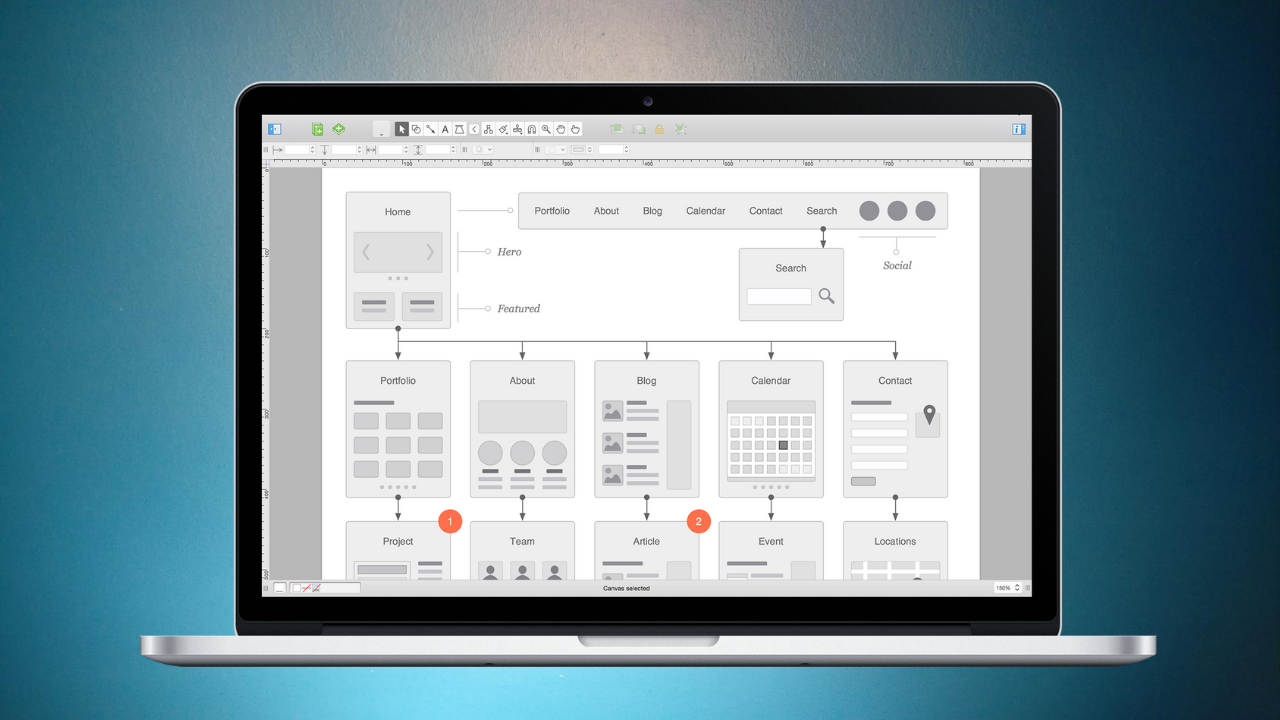
Depending on the project goals, we take our time to sketch out a schematic overview of the end product. This way, we see the screen-by-screen evolvement of your app or website and the exact user flow. This scheme sets the tone for future design work and gives a chance to build the prior picture of the app/website even before the actual development starts.
Without a clear wireframe, your project is just a vague idea in your mind, so this is the first step to materialize it and see right away the possible benefits and drawbacks. Thus you get a chance to fix certain issues already on the wireframing stage and save much effort, time, and money in the future.
It is critical to note that wireframes do not require any beautifications, such as colors or fonts. The main aim of it is to see the whole project idea from the outside and make sure it corresponds to all the intended business goals. Simply put, wireframing is just a way to tell what the project is all about using visuals instead of words so that, for instance, stakeholders could get a better understanding of it.
Step #5. Roadmap or the route to success
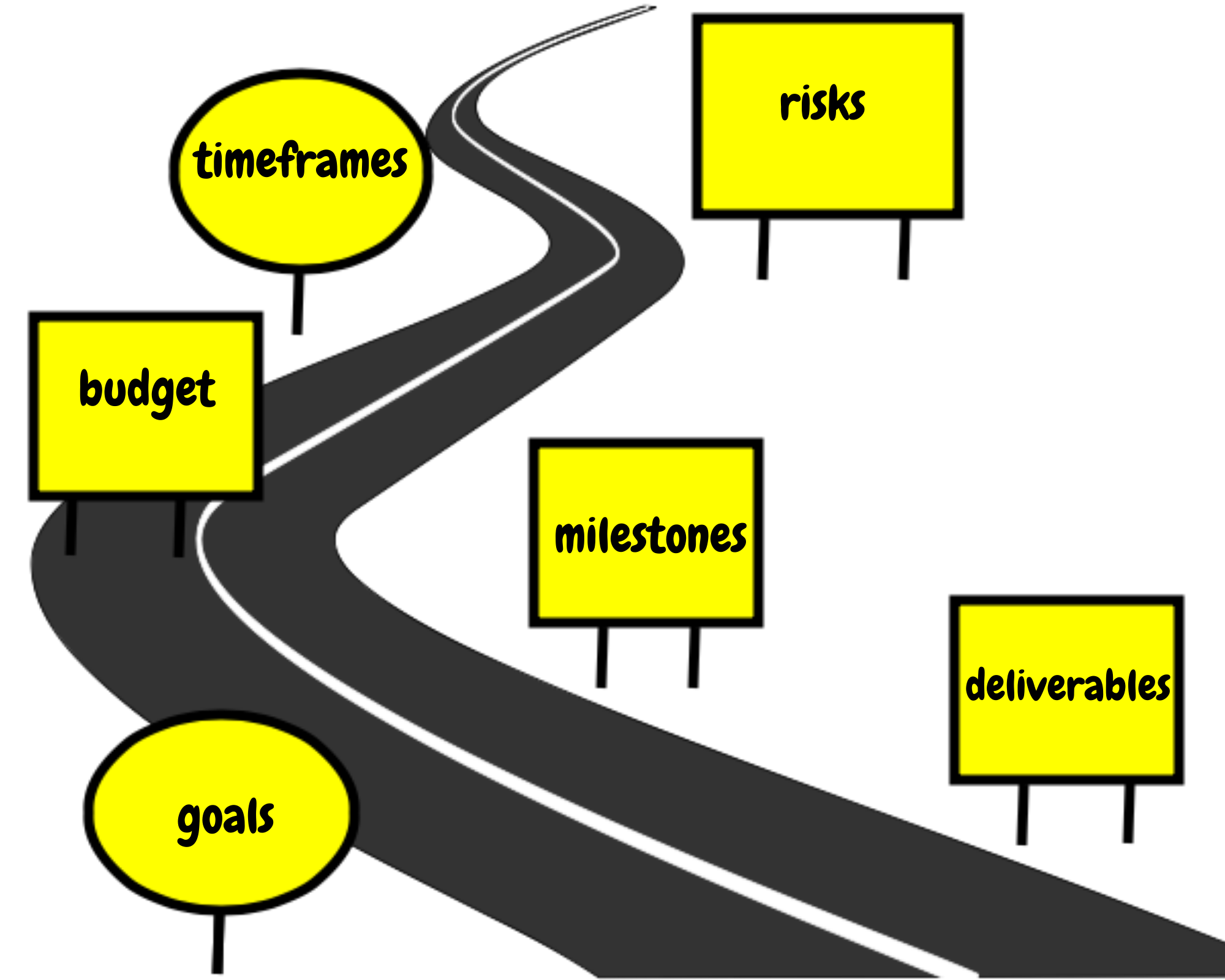
Building a structured and realistic roadmap, that will be referred to throughout the whole project cycle, takes time and much thinking. Although it is definitely worth it, as it helps to guide the work of the whole team.
The best analogy to a project roadmap could be travel arrangement, as before setting out somewhere you need to work out a route that defines the necessary stops and forecasts possible risks. Just to be safe and ready to come to a new place. The same with drawing a roadmap, as starting a project reminds of going to a new country you’ve never been to, so it is critical to proactively determine all the milestones, deliverables, time frames, and anticipate things that can go wrong.
Step #6. Let’s plan it out
In our team, an accurate project plan includes a roadmap, all the resources needed for the project, a set of tasks for each member of the team, an associated budget, a project timeline, and a schedule of important meetings and calls.
In project management we make the most of the agile Scrum framework, this means we are extremely flexible and solve any issues as soon as they emerge, always provide you with open and honest feedback, and prioritize clear and direct communication. That’s why whenever something bothers you about the project, don’t hesitate to open Slack at any time of the day and write to us with all of your concerns. If we receive your inquiry within our working hours we promise to answer right away, but in case we sleep, or on a weekend, we’ll give you a response first thing the next working day.
Once the right project plan is in place, we know exactly: the project direction, who and how is working on it, and what the limits are in terms of money and time. Plus, everyone on the team has a clear understanding of their responsibilities.
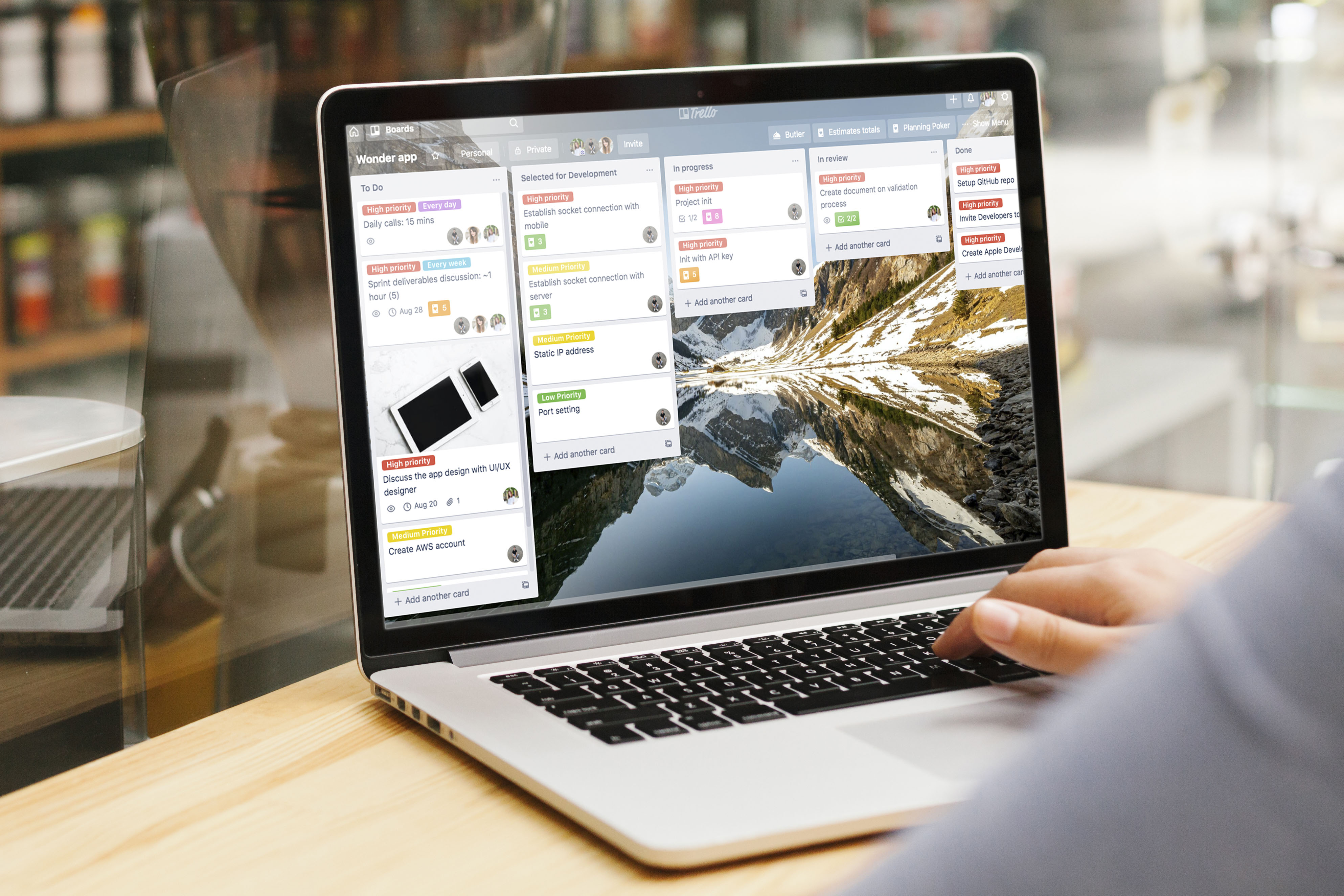
All the project tasks we usually allocate and keep on the Scrum boards. We transform the difficulty of each task into story points to be better aware of how much effort and time they require. Depending on your preferences, we come up with a schedule of daily standups, calls after weekly sprints, and any additional meetings that you may need. Again we are flexible and always adjust to your individual requirements concerning any aspect of the project realization. As we strive to make it easy and hustle-free for you.
Step #7. Final estimate
Once we take all the previous steps, we can give you a final budget and time estimate. Probably, you’d think, “Isn’t it a bit late?”. In fact, it isn’t, as an estimate we provide you with at first is a rough one, and only after we get a clear vision of all the project components, you’ll get a final project estimation.
Step #8. From development to deployment
We stay with you till the very release, caring for your project and ensuring along the way that all aspects of the SDLC (Software Development Life Cycle) run in full compliance with your needs and objectives. Each team player is driven to surpass your expectations and deliver top-quality results quicker. Actually, this is a common practice in our company to deploy applications and websites even before the date of the final release.
Technology is changing our reality every day, and we are proud to make a significant contribution to it with every launched product and every solved technical issue.
So, if you have a great idea in mind or need to deal with a tech challenge of any complexity – contact us and we’ll do our best to help.
