Six patterns cover most first integrations. Each ships as a bounded feature you can measure before you widen the scope.
Support triage and draft replies
Tickets classified by intent and urgency, relevant help articles retrieved, replies drafted for an agent to approve.
Faster first response, fewer repetitive tickets
Document extraction
Invoices, contracts and intake forms turned into validated fields; low-confidence ones go to a human, not a guess.
Manual data entry becomes a quick review step
Search that understands questions
Semantic search across your documents, tickets or catalog; exact identifiers still win when they should.
Users find answers instead of filing tickets
In-product assistants
“Why did this invoice fail?” answered from your own data, scoped to what each user is allowed to see.
New users reach value sooner, ask you less
Content generation at scale
Product descriptions, outreach and report narratives generated from your data, with a review step before publishing.
Catalog-scale copy without agency budgets
Agents for back-office workflows
Multi-step agents reconcile records and chase missing information across your tools, with approval gates for anything irreversible.
Your ops team does higher-value work
Industries
Where AI integration pays off first
The same pattern — a service boundary, retrieval over your data, a human in the loop — lands differently in each industry we work in.
Fintech
Transaction categorization, support triage and KYC document extraction with human review. PII stays in your cloud; prompts are logged without card data.
Models, frameworks and infrastructure we work with
We do not sell a platform. We integrate the model that fits your data, budget and compliance needs — through a service boundary your own team can maintain.
Models
OpenAI (GPT), Anthropic (Claude), open models through AWS Bedrock, Google Vertex AI or self-hosting.
Frameworks
LangChain and LlamaIndex where they help, plain SDK calls where they do not; evaluation sets that run in your CI.
Retrieval
pgvector in Postgres, Pinecone or OpenSearch; hybrid keyword and vector search with re-ranking.
Back end
Node.js with NestJS, Next.js API routes, Python services for data pipelines — see NestJS vs Next.js for how we choose.
Front end
React and Next.js for web, React Native for mobile — the AI feature ships inside the screens your users already know.
Infrastructure
AWS and Google Cloud, Docker, queues for long-running jobs, observability for prompt quality and spend drift.
If your product runs on something else, the integration pattern is the same — a service boundary and an API.
Proof
AI integration work we can show
Client work, named where we may name it.
Sourcd.ai for Hiremii — AI outreach assistant for recruiters
An OpenAI-powered assistant delivered as a Chrome extension: React front end, Node server on AWS, Auth0. Personalized candidate emails went from an hours-long chore to seconds.
Newton — AI campaign recommendations for marketing budgets
A desktop app that allocates marketing budgets, extended with an AI feature that recommends campaigns from sales statistics — next to the existing planning logic, not replacing it.
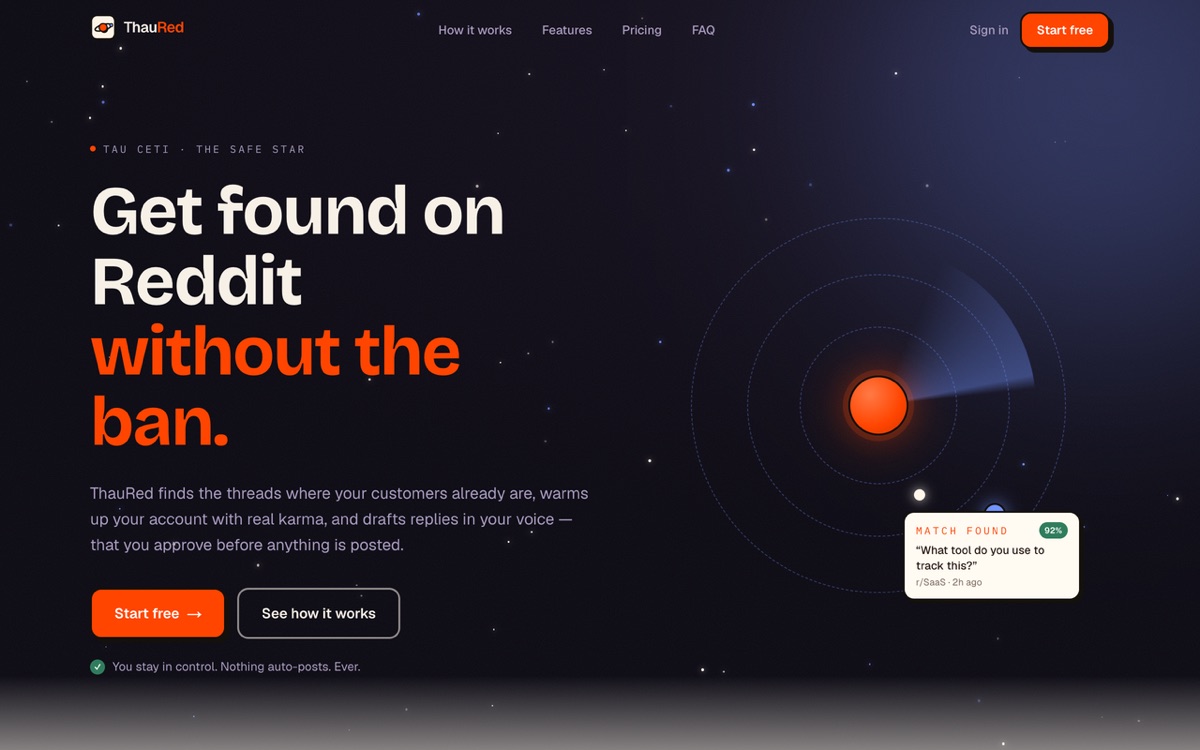
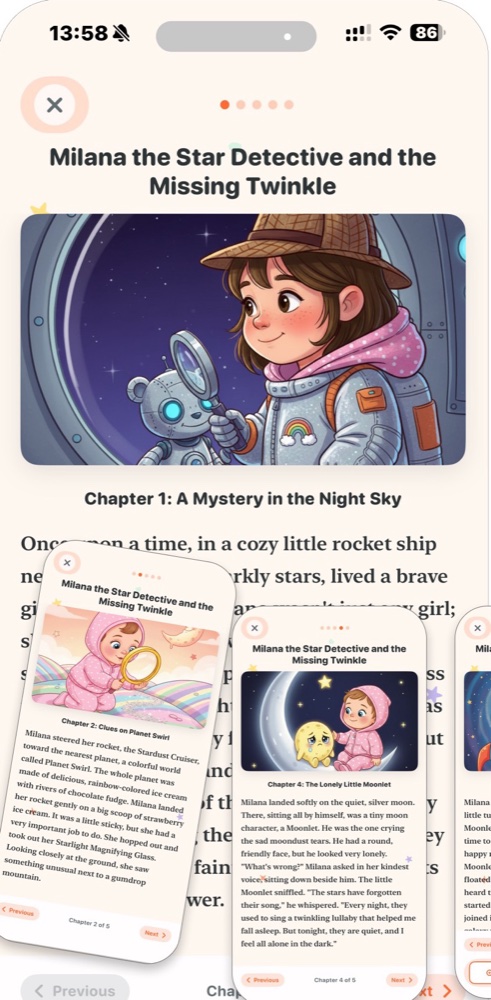
We also ship AI products we own: My Baby is Hero, a bedtime-story app that generates illustrated stories with Gemini, and ThauRed, a Reddit lead-generation tool where an LLM scores threads and drafts replies a human approves. Every pattern on this page runs in production there first.
Most of our AI work lands in existing React, Next.js and Node codebases, so the first week is spent reading your system, not selling a rewrite. Whether to build at all is a question we answer honestly in custom software vs off-the-shelf tools.
Senior engineers own the prompts and the plumbing
The same people design the prompt tests, the retrieval pipeline and the fallbacks — nothing gets lost between the notebook and production.
You own everything
Code, prompts, evaluation sets and provider accounts stay in your repositories and your billing. No proprietary wrapper, no lock-in when the engagement ends.
FAQ
AI integration services — frequently asked questions
What is AI integration?
AI integration is adding AI capabilities — usually an LLM, an agent or retrieval over your data — to software you already run, without rebuilding it. The AI runs as a separate service your product calls through an API, so your database, UI and business logic stay intact. At IvorySoft an integration project starts with a one-week discovery that decides which capability fits (generation, classification, an agent or RAG), then a prototype on your real data behind a feature flag, then a production rollout with monitoring and fallbacks.
What is the difference between AI integration and AI development?
AI integration connects existing models — OpenAI, Anthropic, open-source — to your product and data. AI development trains or fine-tunes models. Almost every SaaS and web product needs integration, not development: the model is a commodity, the work is in retrieval, prompts, evaluation, guardrails and cost control. We take on fine-tuning only when an evaluation set proves that prompting and retrieval cannot reach the target quality.
How long does an AI integration project take?
A discovery week, a two-to-three-week prototype on your data, and a rollout phase — typically 4–8 weeks from kickoff to production for a first feature such as an assistant, an extraction pipeline or an agent. Adding a second capability on the same foundation is usually two to three weeks. Timelines stretch when data is scattered or access is unresolved, which is exactly what the discovery week surfaces.
How much does AI integration cost, and what about the API bills?
Two numbers matter. The engineering budget starts with a fixed $4,900 discovery week, credited toward the build if we proceed; the prototype and rollout are priced after discovery, so you never sign an open-ended retainer. The second number is the recurring model spend — we design for it from day one with caching, routing simple requests to cheaper models and per-tenant limits, and give you a cost-per-1,000-requests figure before launch, so the API bill is a known number rather than a surprise on the first invoice.
Can you integrate OpenAI or Anthropic into a React, Next.js or NestJS app?
Yes — that is our default stack. We built the Sourcd.ai OpenAI-powered assistant with React, a Node back end on AWS and Auth0, and we integrate through a provider abstraction so a product can switch between OpenAI and Anthropic models without touching its features. Mobile products get the same layer through React Native.
Will AI integration disrupt the product we already run?
No. The integration runs as a separate service behind your existing API and a feature flag, so current users see nothing until you switch a cohort on. Your database schema and UI stay as they are; the AI service reads through the same permissions your app already enforces. Rollback is turning the flag off. The only changes inside the existing codebase are the calls to the new service and the UI for the feature itself.
How do you handle our data and our customers’ data?
Data stays in your cloud account; we call model providers with the minimum context a feature needs, strip identifiers where the feature allows, and use provider settings that exclude your data from training. For regulated products — fintech, healthcare — we add a human review step, prompt and response logging with PII redaction, and per-tenant isolation. You get a one-page data-flow diagram as part of discovery, useful for your own security questionnaires.